-
Success for Life University Providing The 10 Character Traits Your Workforce Is Missing: Preparing Today’s Employees - and Tomorrow’s Neurodivergent Talent.
Success for Life University builds a workforce that thinks better, works better, and lives better. Our evidence-informed program develops 10 core character traits - giving both current employees and incoming neurodivergent talent the tools to succeed at work and in life.Why Success for Life University is different
- Which means more profit for your bottom line
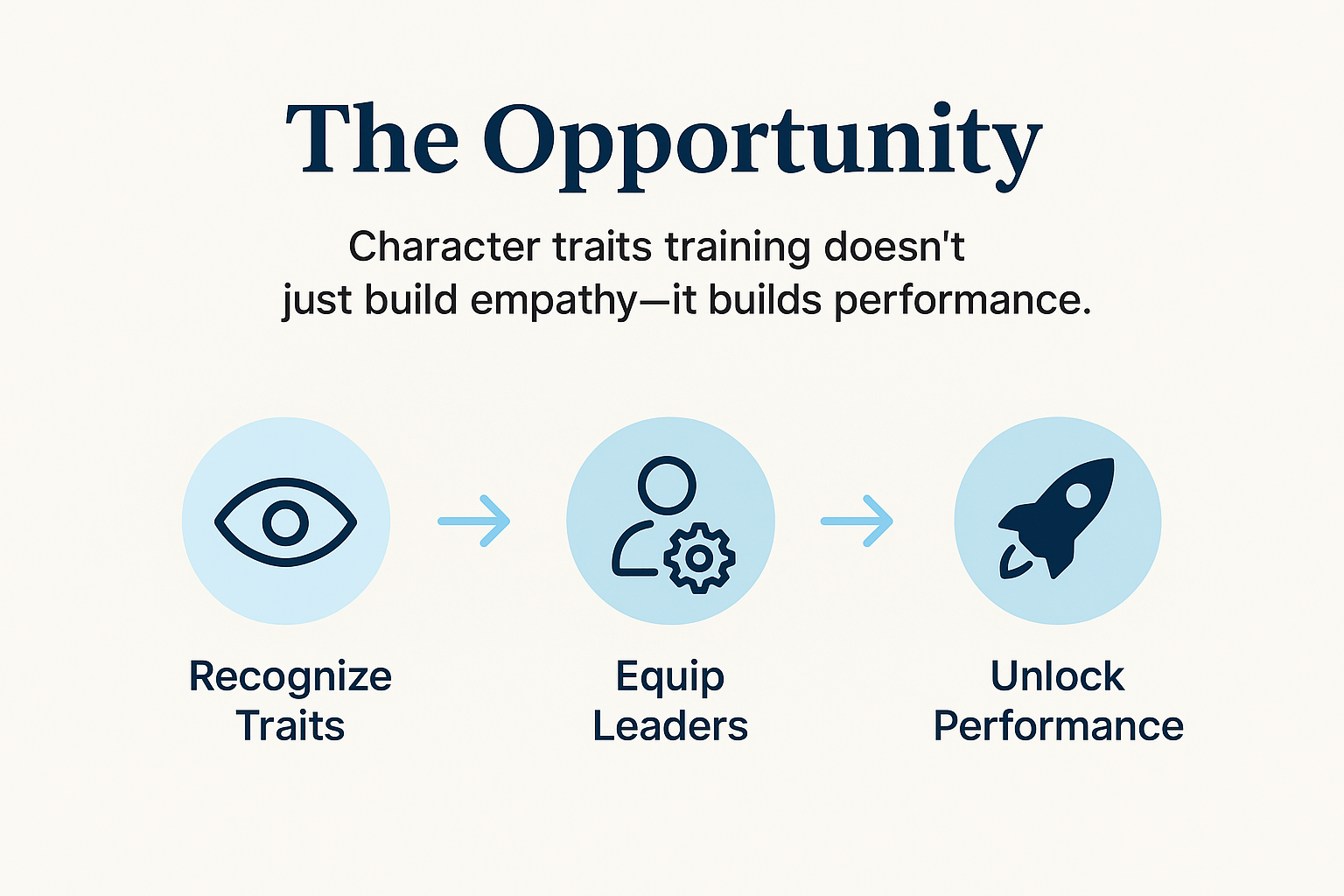
Most corporate training focuses on skills and software. We focus on the human operating system underneath: resilience, focus, communication, emotional regulation, and more. By intentionally building 10 foundational traits across neurotypical and neurodivergent employees, your company gains higher performance, lower burnout, and a culture where more people can actually thrive.

Your People Don’t Have a Skills Gap. They Have a Traits Gap.
Executives are asking employees to do more with less, adapt faster, and collaborate across more complexity than ever. But most teams - neurotypical and neurodivergent alike - were never explicitly taught how to manage focus, navigate conflict, handle stress, or keep going when things get hard. The result? Quiet burnout, disengagement, and high-potential people quietly opting out.
When your incoming employees have neurodivergent conditions
For neurodivergent employees, the stakes are even higher. The same environment that stretches typical brains to their limits can become unmanageable without tools for self-advocacy, emotional regulation, and work design that fits how their brains actually work.

One Program. Ten Traits. A Stronger Workforce for Everyone.
Success for Life University systematically teaches 10 character traits for life-long success - designed for all employees and tailored to the realities of neurodivergent brains. We combine clear language, practical tools, and real-world practice so that what people learn on Monday actually shows up in how they think, decide, and collaborate on Friday.
Our Life skills courses are:
- Built for all brains – Accessible for neurotypical and neurodivergent employees, with concrete, non-clinical language.
- Business outcomes first – Designed to impact retention, engagement, quality, and innovation - not just “feel-good” learning.
- Scalable and repeatable – Can be embedded into onboarding, leadership development, and ongoing learning.

Why Your company should choose Success for Life University to benefit your bottom line
Plenty of trainings promise “soft skills.”
We go deeper. Our framework is rooted in real-world executive experience, neuroscience-informed practices, and the lived reality of neurodivergent adults in today’s workplaces. We translate that into a program that is safe, clear, and practical for everyone - from your quiet high-potential analyst to your outspoken neurodivergent innovator.
What differentiates Success for Life University from any other training?
- Neuro-inclusive by design – Built from the ground up for mixed teams, not “adapted” after the fact.
- Action before theory – Every session delivers tools employees can use THAT DAY!
- Language executives can champion – Framed in terms of performance, risk mitigation, and long-term talent development.
- Measurable change – Options for pre/post assessments, behavioral indicators, and employee feedback.
The 10 Traits We Build in Every Employee
Your best performers don’t just know what to do - they show up with the character traits that make consistently great work possible. Our program explicitly teaches and develops these 10 traits across your entire workforce, with tools and language that work for both neurotypical and neurodivergent employees.
Each trait is tied to measurable business value: better collaboration, fewer costly mistakes, higher resilience, and a culture where more people are able - and eager - to contribute at their best.
Trait 1: Caring
What it is:
A genuine concern for the impact of one’s work on customers, colleagues, and the business - shown through actions, not just words.
Why it matters:
Caring employees are more likely to catch errors, support coworkers, and go the extra mile for clients. For neurodivergent employees - who may already feel deeply about fairness and outcomes - this trait helps them channel that care into constructive, visible behaviors aligned with company goals.
- For all employees: increases ownership, service mindset, and day-to-day quality.
- For neurodivergent employees: turns intense concern or sensitivity into clear, pro-social actions that build trust.
Trait 2: Common Business Sense
What it is:
The ability to make grounded, practical decisions that consider cost, time, risk, and impact - within the real constraints of the business.
Why it matters:
Common business sense prevents rework, reduces friction, and keeps teams aligned with strategy. For neurodivergent employees, it provides a clear decision-making framework where “unspoken rules” are made explicit, reducing confusion and missteps.
- For all employees: improves everyday judgment and alignment with leadership priorities.
- For neurodivergent employees: demystifies unwritten expectations and social/business norms.
Trait 3: Confidence
What it is:
A grounded belief in one’s ability to contribute, combined with the willingness to speak up, ask questions, and own decisions.
Why it matters:
Confident employees raise flags early, propose ideas, and take healthy risks. Neurodivergent employees often have strong insights but may hesitate to share them; building confidence ensures their perspectives are heard instead of hidden.
- For all employees: leads to faster decision-making, better communication, and more innovation.
- For neurodivergent employees: combats self-doubt and fear of “getting it wrong” in group settings.
Trait 4: Effort
What it is:
The consistent willingness to bring energy and focus to tasks, even when they’re challenging, repetitive, or outside one’s comfort zone.
Why it matters:
Effort is the engine behind every result. When people know how to manage their energy and apply sustained effort, performance becomes reliable instead of unpredictable. For neurodivergent employees, we emphasize strategies to work with their brain (not against it) to access effort more consistently.
- For all employees: higher reliability, fewer dropped tasks, and greater follow-through.
- For neurodivergent employees: tools to manage energy swings, overwhelm, and task initiation.
Trait 5: Initiative
What it is:
Seeing what needs to be done - and stepping forward without waiting to be asked.
Why it matters:
Employees who take initiative reduce management overhead and drive continuous improvement. Neurodivergent employees often notice patterns and problems others miss; this trait empowers them to act on those insights in a way that fits organizational norms and expectations.
- For all employees: more self-directed action, less “hand-holding,” and faster progress.
- For neurodivergent employees: permission and structure to turn observations into proactive contributions.
Trait 6: Motivation
What it is:
An internal drive to do quality work, grow, and contribute to something larger than oneself - sustained over time.
Why it matters:
Motivated employees stay engaged, learn quickly, and weather difficult periods more effectively. Neurodivergent employees may experience intense interest in certain tasks and low motivation in others; we teach how to harness that interest while building strategies to stay engaged even when tasks aren’t naturally stimulating.
- For all employees: improved engagement, lower burnout, and stronger commitment to results.
- For neurodivergent employees: practical methods to create interest, structure rewards, and maintain momentum.
Trait 7: Perseverance
What it is:
The ability to stay with a problem, project, or goal despite setbacks, frustration, or slow progress.
Why it matters:
Perseverance separates short bursts of effort from meaningful, long-term results. For neurodivergent employees, challenges like perfectionism, rejection sensitivity, or executive function issues can make sticking with tasks difficult; we provide tools to recover quickly and continue forward.
- For all employees: fewer abandoned initiatives and stronger follow-through on strategic goals.
- For neurodivergent employees: supports bouncing back from criticism, mistakes, and overwhelm.
Trait 8: Problem Solving
What it is:
A structured approach to understanding issues, generating options, and implementing practical solutions.
Why it matters:
Problem solvers reduce escalation, save time, and build confidence across teams. Many neurodivergent employees are naturally strong problem solvers; this trait teaches them to apply their strengths within clear frameworks that managers trust and understand.
- For all employees: more autonomy, fewer bottlenecks, and better-quality decisions.
- For neurodivergent employees: channels analytical or creative strengths into repeatable methods.
Trait 9: Responsibility
What it is:
Owning one’s actions, commitments, and impact - without excuses, blame-shifting, or hiding from hard conversations.
Why it matters:
Responsibility builds trust. When employees consistently do what they say they will do - and own it when they don’t - leaders can delegate more confidently. For neurodivergent employees, this trait includes building systems for tracking commitments and communicating clearly about capacity and needs.
- For all employees: greater accountability, clearer communication, and reduced management stress.
- For neurodivergent employees: support in managing commitments, expectations, and repair when things go wrong.
Trait 10: Teamwork & Working Closely with Others
What it is:
The ability to collaborate, share information, respect differences, and contribute positively to team dynamics - especially when people think and work differently.
Why it matters:
High-performing teams are built, not born. Teamwork is about more than being “nice”; it’s about navigating conflict, using diverse strengths, and delivering shared outcomes. For neurodivergent employees, this trait includes explicit guidance on communication norms, boundaries, and ways to collaborate that honor their needs and strengths.
- For all employees: better collaboration, fewer misunderstandings, and more effective use of cognitive diversity.
- For neurodivergent employees: clarity on expectations, communication tools, and safe ways to participate fully.
It's time to remember your Greek history.
342 B.C. Philip of Macedonia was marching towards Greece. His armies of Macedonia were massing outside of Athens. The Senate in Greece was in uproar. They were uncertain of what to do. They were making speeches, they were trying to figure out a program. Nothing happened until Demosthenes stood up and made a step-by-step program with a call to action. When he finished up, the people jumped up, the citizens jumped up and said let’s march!
Folks, this is your time to march.